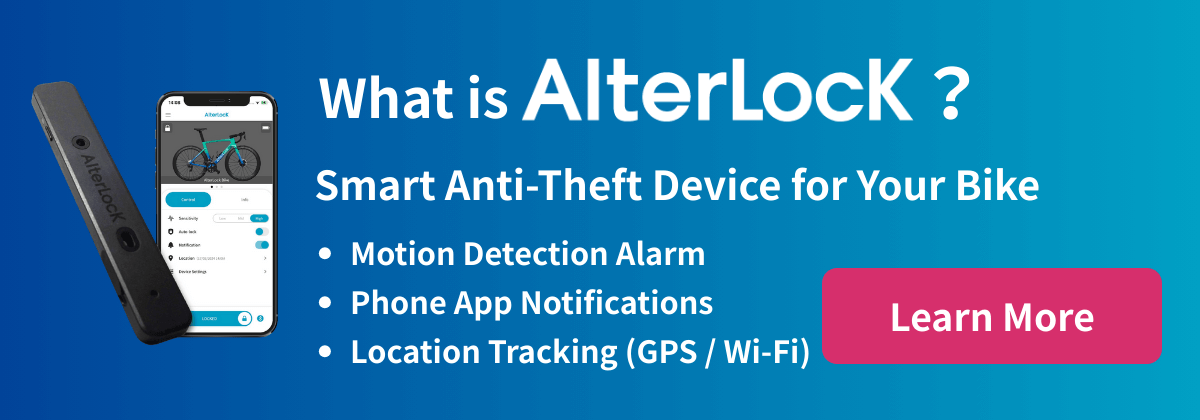
AlterLock was developed with one clear purpose: theft prevention. It’s an IoT (Internet of Things) device designed to protect your valuable bikes and motorcycles.
The latest model, AlterLock Gen3, uses the LTE-M communication standard—but what makes LTE-M superior to other technologies?
In this article, we’ll explore LTE-M’s technical features and benefits, compare it with other IoT communication standards, and explain why AlterLock adopted LTE-M.
What is LTE-M?
LTE-M, officially known as LTE Cat-M1, is a Low Power Wide Area (LPWA) network technology built on the globally deployed LTE (Long Term Evolution) infrastructure.
It’s designed for IoT devices, enabling low power consumption and wide-area coverage while leveraging existing mobile networks. In the IoT era—where millions of devices connect to the internet—LTE-M ensures efficient communication without draining battery life.

Key Features and Advantages of LTE-M
1. Power Efficiency
One of LTE-M’s biggest strengths is its low power consumption.
Technologies like PSM (Power Saving Mode) and eDRX (extended Discontinuous Reception) allow devices to enter deep sleep when idle and wake periodically for communication.
This makes LTE-M ideal for battery-powered devices such as theft-prevention systems and smart meters that need to operate for long periods without external power.
2. Wide Coverage
LTE-M uses existing LTE networks, ensuring broad coverage even in challenging environments like buildings or underground.
It supports mobility and handover, so devices can stay connected while moving—perfect for logistics, asset tracking, and remote monitoring.
3. Reliable Data Transmission
While LTE-M offers lower speeds than standard LTE, it provides sufficient bandwidth for IoT needs like sensor data and location updates.
Its reliability minimizes data loss and latency, ensuring consistent performance.
4. Cost-Effectiveness
LTE-M modules are more affordable than traditional LTE modules, and IoT-specific data plans keep operational costs low.
LTE vs. LTE-M
Both are 4G technologies, but their purposes differ:
- LTE: High-speed communication for smartphones and tablets (up to 1Gbps).
- LTE-M: Optimized for IoT—lower speed (~1Mbps), lower power, and wider coverage.
LTE-M in the 5G Era
Even as 5G expands, LTE remains essential for coverage. LTE-M will continue to play a key role for IoT devices thanks to its low power and wide-area capabilities, complementing 5G rather than replacing it.
Real-World Applications
- Logistics & Asset Tracking: Long battery life for tracking devices.
- Smart Meters: Remote monitoring of utilities.
- Healthcare Devices: Wearables transmitting vital data.
- Theft Prevention: Alerts and location updates for bikes and motorcycles.
Comparison with Other LPWA Standards
| Standard | Bandwidth | Speed | Power | Mobility | Coverage | Module Cost |
|---|---|---|---|---|---|---|
| LTE-M | 1.08 MHz | 1 Mbps | Medium | Yes | Global | High |
| NB-IoT | 200 kHz | 250 kbps | Medium | No | Wide | Medium |
| LoRa | 125–500 kHz | 10–50 kbps | Low | No | Limited | Low |
| Sigfox | 100 Hz | 100 bps | Low | No | Limited | Low |
Why AlterLock Chose LTE-M
For theft prevention, low power consumption, wide coverage, and cost efficiency are critical. LTE-M meets all these requirements and offers global scalability.
Earlier AlterLock models (Gen1/Gen2) used Sigfox, but LTE-M enables two-way communication, higher data capacity, and better coverage—even in urban, underground, or indoor environments.
Conclusion
LTE-M is a game-changer for IoT devices, delivering reliable, energy-efficient, and wide-area connectivity. For AlterLock, it ensures long-term security and peace of mind for riders worldwide.
As IoT adoption grows, LTE-M will remain a cornerstone technology.